


EGI Squid Line Capacity: The Baiting Battle – Big Spool Swagger vs Small Spool Finesse 🎣⚖️
Let’s get one thing straight. Talking about line capacity for EGI squid fishing without mentioning baiting is like discussing a race car’s top speed without considering the track. I learned this lesson not in theory, but in the inky black of a night session, heart pounding as a subsurface giant siphoned my live bait. My reel, spooled for maximum “just in case” capacity, felt slow and lazy on the retrieve. The squid, feeling the unnatural resistance, ejected the bait before I could set the hook. All I felt was a sickening emptiness. The problem wasn’t the bite; it was the systemic inertia. My “bigger is better” mindset had just cost me a trophy. The debate between big vs small line capacity for baiting isn’t about fear of running out of line. It’s about hydrodynamic efficiency and psychological warfare. Do you want a tank or a scalpel? Let’s dissect the truth.
The Physics of the Pick-Up: Why Capacity Isn’t Just a Number
Forget storage. Think retrieval mechanics. When baiting for squid—especially with live baits like poddy mullet or small fish—the retrieve is often slow, subtle, and erratic to mimic distress. The diameter of your spool (directly related to its capacity) dictates your mechanical advantage.
-
Big Capacity Spool (Large Diameter): Offers a higher retrieve per crank (IPTC). This is great for fast jigging retrieves with artificial EGI. However, for slow baiting, a large spool can make fine-tuning speed difficult. It also has greater rotational inertia. It’s harder to start and stop, which can translate to a less “lifelike” feel for a hesitant squid mouthing your bait. According to principles of angling mechanics, a larger, heavier spool requires more torque to accelerate, potentially creating minute hesitations in your retrieve that savvy squid can detect.
-
Small Capacity Spool (Small Diameter): This is your finesse engine. Lower IPTC allows for incredibly precise, slow-roll retrieves. The spool has low rotational inertia, meaning it starts and stops with the flick of your wrist. This lets you impart tiny, tantalizing twitches to your live bait without dragging it unnaturally. The squid feels a “wounded” struggle, not a “hooked” one. A study on predator-prey interactions in cephalopods notes that squid are highly sensitive to hydrodynamic cues; a retrieve with inconsistent resistance often triggers rejection.
The Baiting Arsenal: Matching Capacity to Your Weapon
Your line capacity choice is meaningless if it’s on the wrong tool. The image points to the core components; let’s define their role in the baiting system.
1. The Foundation: Your Squid Fishing Pole
This is your connection. A dedicated squid fishing pole for baiting is often longer (8’–9’6”) and has a softer, more parabolic action than a pure EGI rod. Why? It acts as a giant shock absorber for live bait and the squid’s initial, often savage, strike. It needs to load smoothly to prevent pulling the bait away. A best squid fishing rod for baiting balances this gentle presentation with enough backbone for hook-setting and steering power. A large-capacity reel on a soft rod can feel unbalanced and clumsy; a small-capacity reel complements the rod’s finesse nature, making the entire system feel alive and responsive in your hands.
2. The Lure: EGI for Squid as a Backup
Even when baiting, an EGI for squid is crucial. It’s your follow-up weapon. You’ve attracted the squid with live scent and movement, but it’s being fussy. A well-placed, subtle-colored EGI jigged past its face can trigger the reaction strike. Your reel’s capacity must handle both: the slow bait retrieve on one cast, and the faster, more aggressive jigging motion on the next. A mid-capacity reel often strikes this balance perfectly.
3. The Heart of the System: The Squid Jigging Reel
This is where the capacity debate lives. The reel is your engine.
-
For Big Bait, Big Current: If you’re baiting with larger live baits in strong current or deep water (30m+), you need a reel with larger line capacity (300+ yards of PE#1.5). The extra line helps manage depth, current drift, and the longer, powerful runs of a hoodwinked giant. Look for reels with a smooth, sealed drag—the first run is explosive.
-
For Finesse & Shallows: In estuaries, piers, or clear, shallow bays, a small to mid-capacity reel (200-250 yards) is king. Its compact size and light spool enhance sensitivity. You’ll feel the tentative taps of a squid “tasting” the bait, allowing you to pause your retrieve—a deadly trigger. This is where the squid jigging reel truly becomes an extension of your nervous system.
The Synergy Test: A Night of Two Setups
Let me apply this. On a recent trip, I set up two rods:
-
Rod A: A powerful 9’ rod paired with a large-capacity squid reel spooled with 30lb braid.
-
Rod B: A lighter 8’6” rod paired with a small-capacity finesse reel spooled with 20lb braid.
Both used live yakka. The big squid moved in. Rod A got the first inquiry—a strong pull. I engaged the reel, but the heavy spool’s inertia created a slight drag. The squid dropped the bait. Minutes later, Rod B’s tip quivered. I engaged the feather-light finesse reel and could feel the squid holding the bait. A gentle lift of the rod, a slow wind to tension, and a firm strike. Fish on. The smaller capacity system won because it preserved the illusion of life.
Building Your Optimized Baiting Rig
-
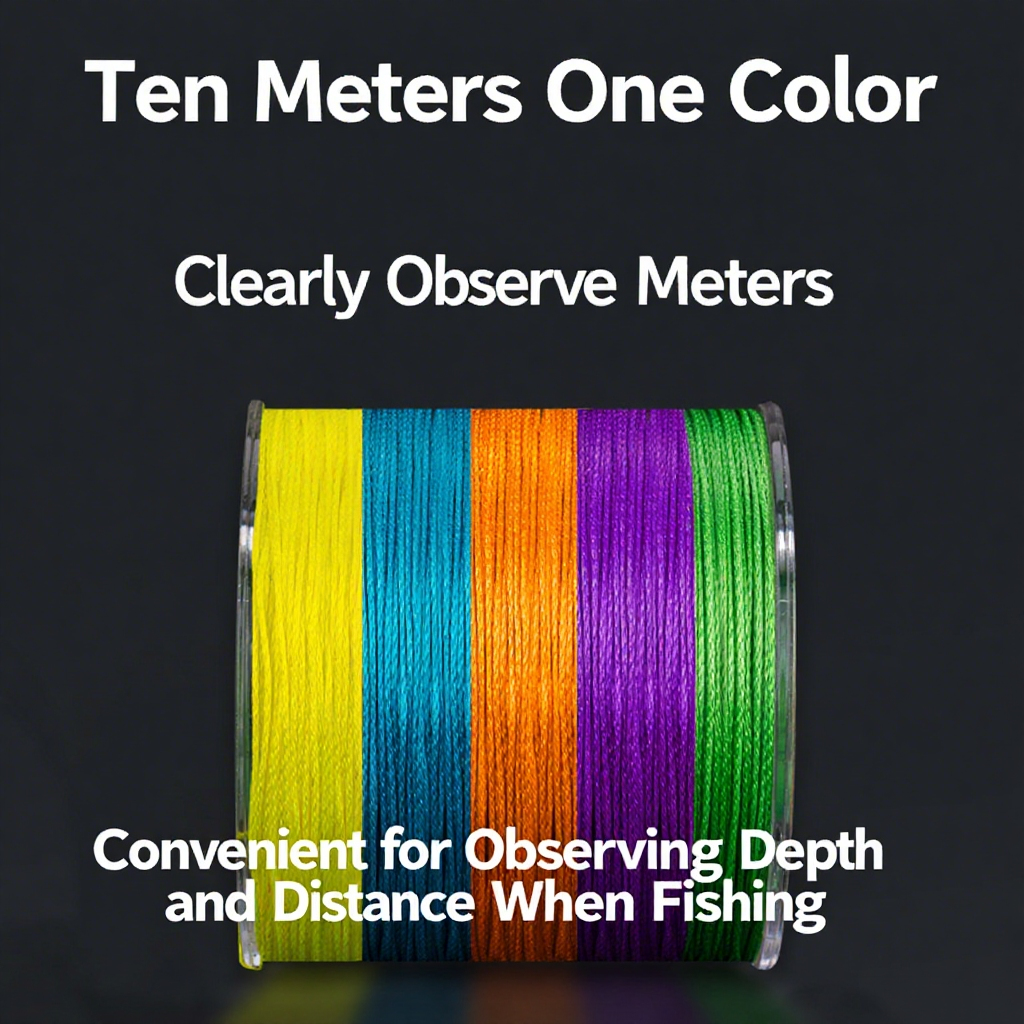
The Main Line: Use thin, high-quality braid (PE 0.8 – 1.5). Its diameter-to-strength ratio lets you pack more line onto a smaller spool, achieving the capacity you need without the bulk. It also has zero stretch for direct contact.
-
The Leader: Always use a fluorocarbon leader (10-20lb, 1.5-2m). It’s nearly invisible and more abrasion-resistant against the squid’s beak and rough skin.
-
The Terminal End: A small, sharp circle hook pinned through the bait’s nose or back allows for a natural presentation and often results in a secure corner-of-the-mouth hook-up.
Your Decision Checklist & Long-Tail Search Path
Before you spool up, ask:
-
[ ] Primary depth/current? (Deep/Strong = Lean Large | Shallow/Calm = Lean Small)
-
[ ] Bait size? (Large Live Baits = Lean Large | Small Baits = Lean Small)
-
[ ] Retrieve style? (Slow, finesse rolls = Small Spool | Fast, power jigging = Large Spool)
To master your setup, search these specific phrases:
-
“Best PE braid line diameter for balancing squid reel capacity and strength”
-
“How to choose a squid jigging reel size for live bait fishing”
-
“Fluorocarbon leader length and test for clear water squid baiting”
-
“Comparing slow-pitch jigging reels vs conventional reels for squid baiting”
-
“Top 5 finesse reels for light line squid fishing in harbors”
EGI squid line capacity for baiting is a strategic choice, not a default setting. The “big” spool offers security and power for the marathon fight. The “small” spool offers precision and persuasion for the silent ambush. Your target, your terrain, and your technique cast the deciding vote. Choose wisely, and you won’t just have line on your spool—you’ll have a tuned instrument for temptation.
What’s your go-to reel size for squid baiting, and what’s the biggest reason behind your choice? Share your setup and story in the comments below—let’s swap secrets! 🦑👇





Leave a comment