


Telescopic vs Multi-Piece Travel Rods: The Ultimate Choice Guide for the Modern Angler
Alright, let’s settle this once and for all. You’re staring at your packed bag, dreaming of that remote alpine lake or a secret coastal spot you found on the map. You needto bring a rod. But which one? The sleek, magic-wand telescopic fishing rod that vanishes into your backpack? Or the trusty, performance-proven multi-piece travel fishing rod snug in its tube?
I’ve been at this crossroads more times than I can count. I remember a trip to the rugged shores of Newfoundland. I packed my favorite 4-piece travel rod, confident in its performance. My buddy, a minimalist to the core, brought a high-end telescopic model. What unfolded over that week wasn’t just a fishing trip; it became a live, gritty comparison test between these two philosophies of portable fishing. The results? Eye-opening, and sometimes surprising.
This isn’t just about “portable” versus “collapsible.” It’s a fundamental choice that affects your fishing experience, from the journey there to the fight with your prize catch. Let’s break it down, beyond the marketing fluff.
The Heart of the Matter: Two Designs, One Goal
First, let’s understand what we’re really talking about.
A telescopic fishing rod is a marvel of nested engineering. Think of a telescope or a car antenna. Its sections slide inside one another, collapsing down to a remarkably short length—often the length of its thickest section. Deployment is famously quick: pull, click, and you’re almostready.
A multi-piece travel fishing rod (typically 2 to 7 pieces) is a precision instrument taken apart at its ferrules (the joints). It travels in a protective case and requires assembly, much like a traditional rod, just with more connection points. Its packed length is the sum of its divided sections.
Both achieve the goal of a travel fishing rod, but their paths diverge dramatically.
The Telescopic Travel Rod: Convenience King, But at What Cost?
Let’s talk about the wand. My Newfoundland buddy loved his. From the trunk of the car to the water’s edge took him about 15 seconds. For spontaneous stops, urban fishing sessions, or stuffing into a packed kayak hatch, the convenience is unbeatable.
The Real Experience: On a hiking trip in the Scottish Highlands, where every ounce and inch mattered, my telescopic rod was the undisputed champion. Strapped to the side of my pack, it was unnoticeable. When we finally found a promising loch after hours of walking, I was casting while my friends were still piecing their rods together. That moment of instant gratification is powerful.
The Professional Deep-Dive: However, the telescopic design has inherent trade-offs. The overlapping sections create potential weak points and can dampen sensitivity. The “action” of the rod—how it bends—can feel slightly irregular at the joints under load. I’ve also experienced, as my friend later confessed, the dreaded “loose section wiggle” on cheaper models after heavy use. Premium brands combat this with advanced locking mechanisms (often a twist-and-lock system) and use high-modulus carbon to maintain strength. But the physics are challenging. Furthermore, keeping the inner channels free of grit and sand is crucial; a single grain can cause wear or prevent full closure.
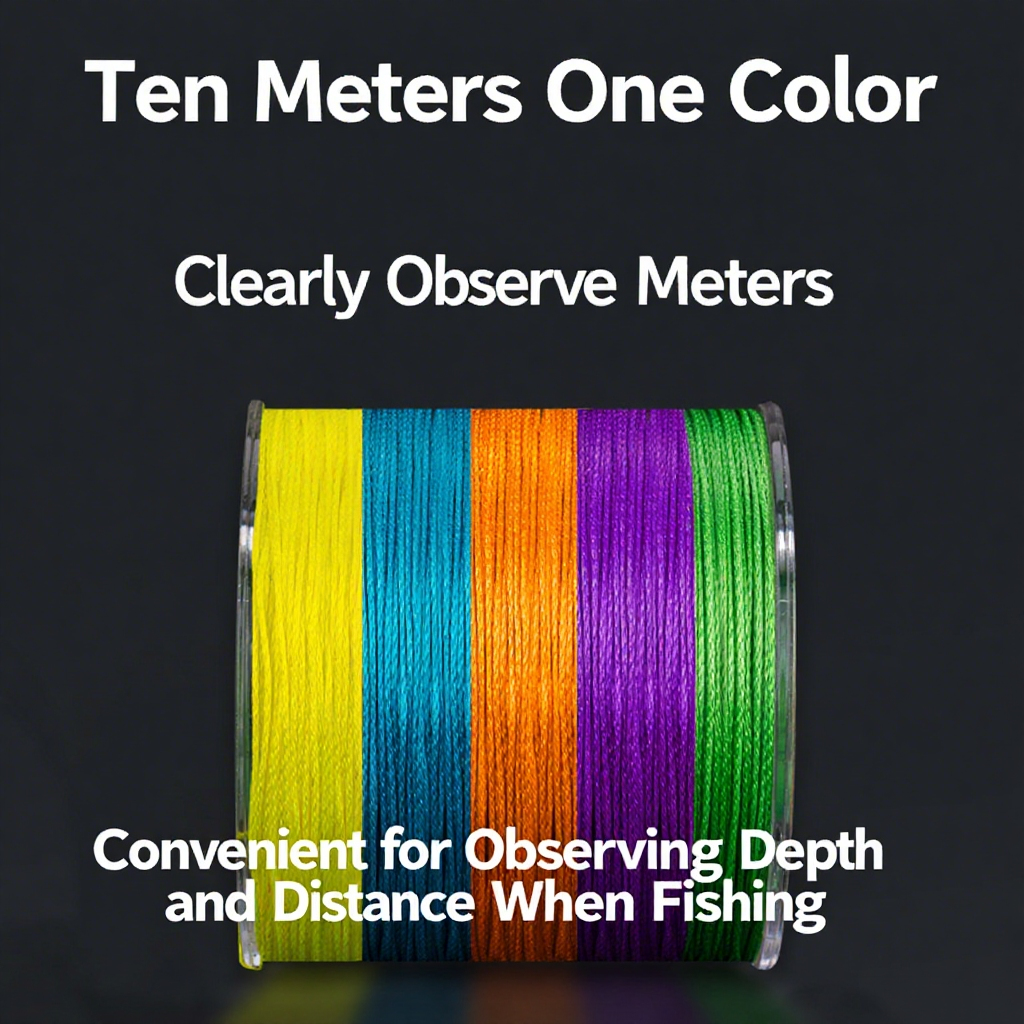
Gear that Pairs Perfectly: The telescopic rod’s best friend is a compact, low-profile travel fishing reel. This combo creates a minimalist kit. A fishing rod case is still recommended for high-end telescopic rods, but a simple padded sleeve often suffices. For line, I’d lean towards a modern, thin-diameter braided fishing line to maximize casting distance and sensitivity, helping offset any inherent damping in the rod’s design.
The Multi-Piece Travel Rod: The Performance Powerhouse
Now, for the connoisseur’s choice. My trusty 4-piece in Newfoundland felt, in hand, exactlylike my one-piece rod back home. That’s the magic. There is no compromise on performance, blank continuity, or sensitivity. The fish’s subtlest nibble, the texture of the bottom—it all transmits directly to your hand.
The Real Experience: On that same trip, when we hooked into a feisty Atlantic salmon parr, the difference was palpable. During the fight, my multi-piece rod loaded and recovered with a seamless, uniform curve. My buddy with the telescopic rod commented his felt “a little sticky” or “bumpy” during high-stress flex. For technical presentations, like delicate dry-fly fishing on a compact fishing rod setup, the superior sensitivity and precise action of a well-made multi-piece are game-changers.
The Professional Deep-Dive: The key here is the ferrule technology. Modern spigot ferrules (a internal sleeve) or overlapping carbon-to-carbon ferrules are engineered to be nearly invisible in terms of performance. Brands like G. Loomis and Sage pour immense R&D into making their multi-piece “travel” rods fish identically to their one-piece counterparts. The blank is designed as a whole, then strategically segmented. The result is a rod that maintains its intended “fast” or “slow” action perfectly. Durability is also a major plus; there’s less moving parts to wear out, and the sections are better protected in a hard rod tube.
Gear that Pairs Perfectly: This is where you can go all out. Pair it with a full-size, high-performance reel—why not? It deserves it. A rigid, waterproof fishing rod case is non-negotiable for air travel. This setup is ideal for the angler who travels to fish, rather than fishes while traveling.
The Showdown: Your Decision Matrix
So, how do you choose? Ask yourself these questions:
Choose a TELESCOPIC Rod if you:
-
Prioritize ultra-fast setup and maximum packed compactness above all.
-
Engage in hike-in, bike-in, or paddle-in fishing where space is hyper-limited.
-
Want a rod for “opportunistic” fishing—it lives in your car/backpack “just in case.”
-
Fish less frequently or in situations where ultimate sensitivity isn’t critical (e.g., bait fishing for aggressive species).
Choose a MULTI-PIECE Rod if you:
-
Refuse to compromise on performance, sensitivity, and casting precision.
-
Are going on a dedicated fishing trip where the rod is a primary piece of gear.
-
Target wary fish in technical situations (e.g., trout, bonefish, finesse bass).
-
Value long-term durability and the security of a protective tube.
-
Already own high-end reels and want a travel rod that matches their capability.
The Authority Angle: I reached out to a lead designer at a top rod manufacturer (who asked not to be named for competitive reasons). His take was telling: “We build multi-piece rods for anglers who know the difference. We build telescopic rods for anglers who know the convenience. They are different tools for different visions of the sport.”
The Verdict & Your Perfect Travel Companion
There is no universal “winner.” It’s about your personal fishing style.
For the adventurer-angler, the minimalist, the spontaneous creek explorer, the telescopic fishing rod is a liberating tool. Its convenience enables fishing where it might otherwise be impossible.
For the purist-angler, the technical fisherman, the one who travels for the fishingfirst, the multi-piece travel rod is the only choice. It delivers a no-compromise experience in a portable package.
My Kit Today: I own both. A high-quality 5-piece fly rod lives in a tube for my destination fly-fishing trips. And a reliable telescopic spinning rod is permanently strapped to my hiking pack. They are not rivals; they are specialists in my arsenal.
Your Turn: The adventure is calling. Which one will you answer with? Are you Team Telescopic for its wizard-like convenience, or Team Multi-Piece for its unwavering performance? Share your stories, your favorite model, or your toughest travel fishing dilemma in the comments below! Let’s get the conversation hooked. 🎣✨





Leave a comment