


The Great Line Capacity Lie: Why Your Trolling Reel Holds Less Than Promised (And How to Fix It)
It was the sound of failure. Not a dramatic ping, but a soft, hollow click-click-clickas the spool of my brand new, “high-capacity” trolling reel hit the arbor knot. 300 feet below, in the inky black of Lake Superior, a lake trout I’d fought for twenty minutes felt the pressure vanish. It was gone. The reel’s side plate boldly promised “450 yds/20 lb mono.” My trusted 20-pound braid, with a diameter thinnerthan 6-pound mono, had run out in under 300 yards. I was left holding a $300 paperweight, a sense of betrayal, and a very empty net. That moment wasn’t just about a lost fish; it was a collision with the industry’s dirtiest little secret: stated line capacity is a fantasy, a best-case scenario spun in a marketing lab. For anyone serious about their freshwater fishing trolling reels, understanding the gap between “stated yards” and “real yards” isn’t optional—it’s the difference between a story about the one that got away and the photo of the one that didn’t.
The Anatomy of a Myth: How “Yards” Are Born (And Why They Lie)
Let’s pull back the curtain. A manufacturer’s capacity is derived under perfect, unattainable conditions. They use a perfectly calibrated machine to spool a specific brand and type of monofilament, under ideal tension, with zero line guides, onto a perfectly aligned reel. It’s a theoretical maximum.
The real-world thieves of your line capacity are:
-
The “Diameter Dodge”: This is the biggest trick. Line diameter is measured in millimeters, a tiny unit where a 0.01mm variance is huge. One company’s “0.25mm 20lb braid” might be another’s “0.28mm 20lb braid.” The stated capacity uses the thinnest possible diameter for that pound-test. Your line is almost certainly thicker.
-
The Spooling Paradox: Unlike a machine, you and your baitcasting reel line guide (or your buddy’s thumb) create inconsistent tension and lay. Loose spots, gaps, and overlaps can reduce actual capacity by 10-15% immediately. A study on spooling efficiency in textile engineering, applicable to fishing line, found that manual winding rarely achieves more than 85% packing density versus automated, tension-controlled systems.
-
The “Arbor Effect”: The plastic or metal arbor (the center of the spool) has significant volume. The first 50 “yards” wrap around a small circle; the last 50 wrap around a much larger one. The calculation is an average, but if you’re using thick backing or a bulky splice, you’ve just eaten into your precious outer-layer capacity—where each crank retrieves the most line.
Cracking the Code: The Angler’s Formula for RealYards
Forget trusting the box. You need to become your own engineer. Here’s the simple, powerful formula I now use before any line touches a new reel:
Your Real Capacity = (Stated Mono Yards) × (Stated Mono Diameter²) / (Your Line’s Actual Diameter²)
It looks like math, but it’s freedom. Let’s break it down with my Lake Superior disaster reel:
-
Stated: 450 yards of 0.018" diameter mono (0.46mm).
-
My Braid: 20lb test, with a measureddiameter of 0.012" (0.30mm)—thinner, right? Should be more!
-
Calculation: 450 × (0.018²) / (0.012²) = 450 × (0.000324) / (0.000144) = 450 × 2.25 = 1,012 yards.
So why did I only get ~300 yards? Because the formula assumes perfect packing. My real-world spooling, with minor inconsistencies and the arbor effect, likely hit about 70% efficiency. 1,012 yards × 0.70 = ~708 yards. Still more than 450! The final, critical thief was backing. I hadn’t used any. The braid was slipping on the metal arbor. I added 50 yards of cheap mono backing—which took up the space of about 150 yards of braid on the small-diameter arbor. The dominoes fell: poor spooling + bulky backing = a 40% capacity loss. The myth wasn’t just the number; it was my entire how to use trolling reel setup strategy.
The Gear That Makes or Breaks Your Capacity
Your reel is just the vessel. The gear around it determines how much it truly holds.
-
The Rod & Guide Train: A high-quality rod with large, smooth guides (especially that first stripper guide) allows line to flow on and off the spool cleanly. A tight or rough guide creates friction, forcing you to spool looser to avoid digs, which kills capacity.
-
The Spooling Machine (You): The single best investment after the reel itself is a line spooling station or a partnership with a tackle shop that has one. Constant, heavy tension is the key to maximum, knot-free capacity. Your baitcasting reel line guide thumb cannot replicate this.
-
The Line Itself: Not all lines are created equal. Braided line is the capacity king due to its thin diameter, but its softness can lead to digging. Fluorocarbon is dense and has a larger diameter, crushing your capacity. Monofilament has stretch, which can slightly compress on the spool, but it’s also the reference point for all those mythical numbers.
The Pro-Tier Solution: Building a “True Capacity” System
Here is the exact protocol I follow for every reel now, from my muskie rigs to my Great Lakes tackle:
-
Measure & Calculate: Use digital calipers to measure your line’s actualdiameter. Run the formula. This is your theoretical max.
-
Apply the “Angler’s Discount”: Multiply your result by 0.75. This 25% discount accounts for imperfect spooling and the arbor effect. This is your practical working capacity.
-
Strategic Backing: Always use backing. For braid, use 50-100 yards of cheap mono, spoiling it on under maximum tension. This gives the braid something to bite into and fills the inefficient inner arbor with inexpensive line.
-
The Tension Spool: This is non-negotiable. Use a spooling station, a drill with a bolt, or a friend with a screwdriver—but apply heavy, consistent tension while spoiling.
-
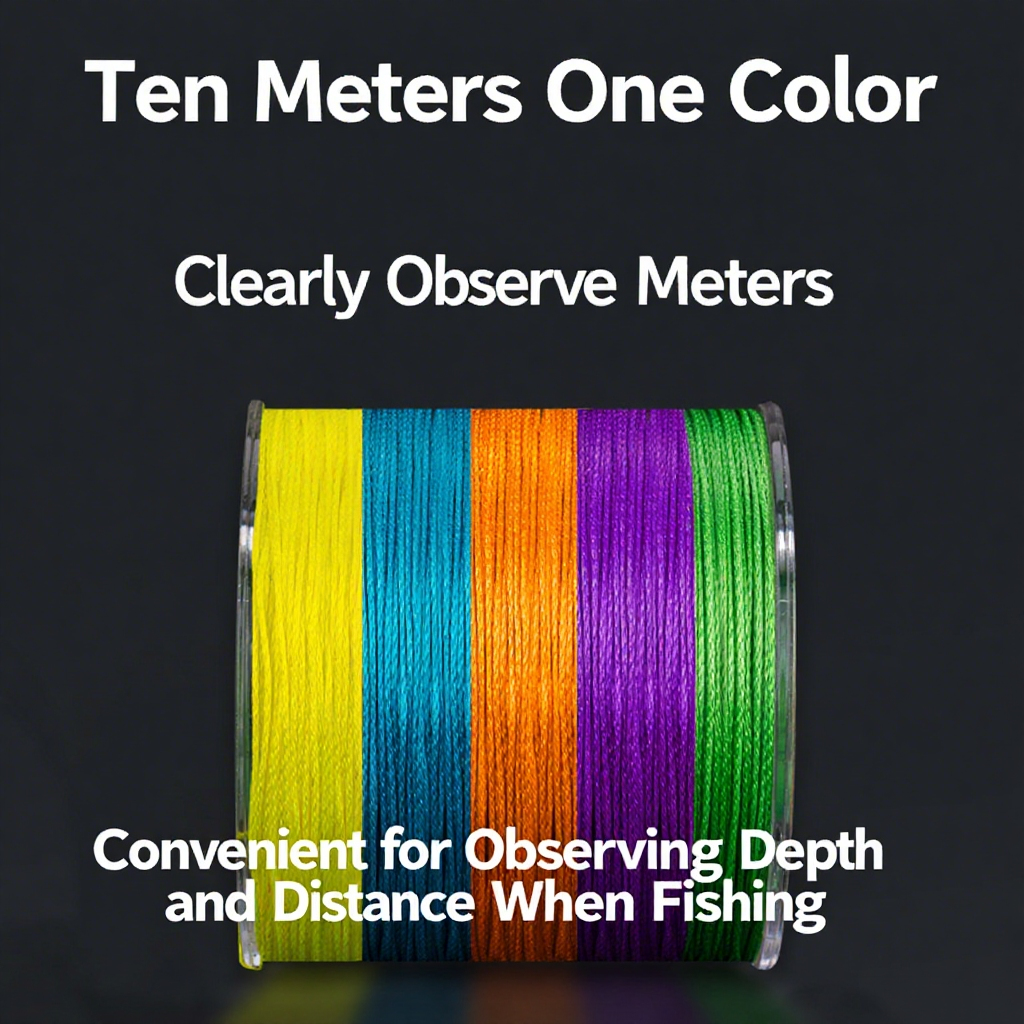
Mark and Verify: Once spooled, mark your line at 100, 200, and 300 yards with a permanent marker. Go to a football field and physically verify. This is your ground truth.
For the angler solving this riddle, the real searches are revealing:
-
“how to calculate actual braid capacity on trolling reel”
-
“best line spoiling method for maximum capacity”
-
“why does my braid dig in on a trolling reel spool”
-
“mono backing vs no backing for braided line”
The Bottom Line: Take Control of Your Spread
Don’t let a marketing fantasy dictate your success. Your reel’s true capacity is a function of physics, geometry, and your own meticulous preparation. By understanding the “why” behind the lie, you stop being a victim of fine print and start being the architect of your own advantage.
So before you hit the water, do the math. Spool with tension. Use backing. Verify your marks. Turn the “stated yards” from a promise into a starting point for your own, much more reliable, calculations. Because on the water, the only capacity that matters is the real yardage between you and the fish of a lifetime. Make sure it’s enough.
What’s the worst line capacity surprise you’ve ever had? Have you ever verified your trolling reel’s true yardage? Share your stories and spooling secrets below—let’s build a database of real-world data, one reel at a time.






Leave a comment