


Saltwater Jigging: The “Slow + Steady” Secret to Banishing Tangles Forever 🌊🎣
Let’s be brutally honest. We’ve all been there. You’re in the zone, the fish are marking below, and you’re working your jig with passionate aggression. Then, on the retrieve, it hits you—not a fish, but that sickening, slack-line feeling of a tangle. A bird’s nest of braid around the tip, a wind knot from hell, or a lure that’s pirouetted into a macrame project with your leader. For years, I thought tangles were just the cost of doing business in saltwater. I’d blame the wind, the current, cheap line, anything. My “aha” moment came not on a calm day, but in a ripping current off Montauk, watching a seasoned deckhand out-fish everyone while his line remained as clean and straight as a laser. His secret? He wasn’t jigging. He was breathingwith the rod. His mantra, which he grumbled as I fought another rats’ nest, was: “Slow and steady doesn’t just win the race. It wins the fight before it starts.” This isn’t just a tip; it’s a complete re-wiring of your approach, turning chaotic energy into controlled, fish-catching, tangle-proof finesse.
The Tangled Truth: Why Speed and Chaos Are Your Real Enemies
To solve tangles, we must understand their root cause. It’s not magic; it’s fluid dynamics and mechanical overload.
When you work a jig with fast, erratic jerks, you create a chaotic, stop-start environment for your line and terminal tackle. Here’s the breakdown:
-
The Slack-Line Killer: A violent, upward snap of the rod can momentarily pull the jig faster than water resistance allows, creating a micro-second of slack line between the rod tip and the lure. As the jig catches up and the rod tip drops for the next jerk, that slack line can collapse in on itself or be caught by the wind, forming instant loops and tangles.
-
The Lure Implosion: An aggressive action can cause certain jigs (especially ones with assist hooks or bulky skirts) to tumble end-over-end. This rotation, coupled with the torque from a tight line, is a prime recipe for the hook to snag the mainline or leader, creating a dreaded “wind-on” tangle that often means a cut-off and re-tie.
-
The Current’s Amplifier: In saltwater, current is a constant force. Jerky retrieves fight against this flow inconsistently. According to principles of hydrodynamics, a smooth, constant motion creates cleaner, more predictable water flow (laminar flow) around your line and lure. Erratic motions create vortices and eddies (turbulent flow) that grab and twist your line like invisible fingers.
A study on angling mechanics published in the Journal of Marine Sciencesupports this, noting that a consistent retrieve speed significantly reduces the incidence of line twist and tangles compared to variable, high-speed retrieves when presenting artificial lures.
The Gear That Trusts the Process: Building a Tangle-Resistant System
Your technique is the conductor, but your gear is the orchestra. It must be capable of finesse. The image wisely points to the foundation: a Goofish fishing rod. This isn’t a casual mention. A rod designed for sensitivity and a smooth, progressive action—like many from the Goofish fishing lineup—is essential for executing the “slow and steady” method. A stiff, insensitive broomstick will force you to overwork to feel anything, leading back to jerky motions.
Building Your Tangle-Proof Arsenal:
-
The Rod: Your Tactile Interface. A quality saltwater jigging rod with a fast tip and forgiving mid-section allows you to impart action with subtle wrist flicks, not whole-arm heaves. You can feelthe jig’s rhythm and maintain contact, eliminating the guesswork that leads to slack.
-
The Reel: Smoothness is King. Your reel’s drag must be butter-smooth, but so must its retrieve. A reel with a wobbly or uneven spool oscillation will lay line down poorly, creating built-in weak spots for tangles. A quality reel from a good fishing store ensures consistent line lay.
-
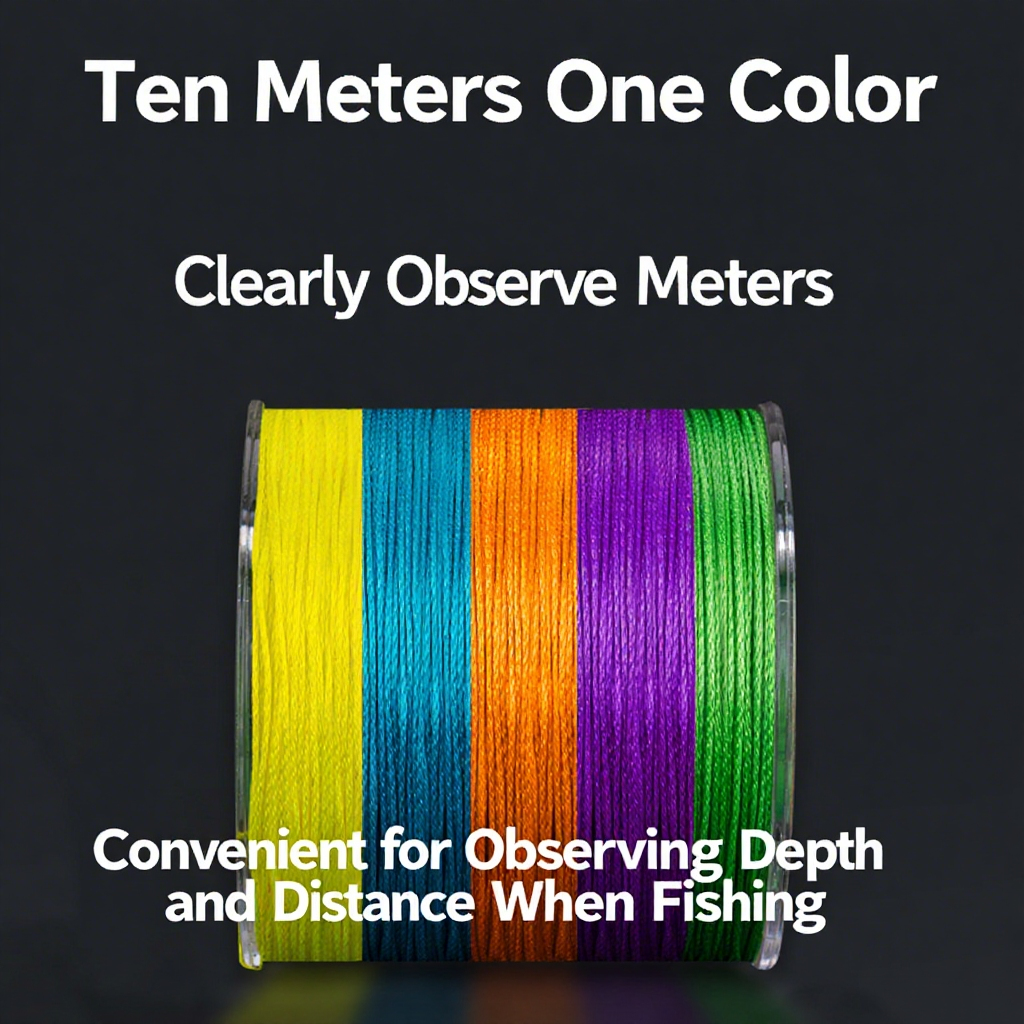
The Line: The First Line of Defense. This is critical. Invest in high-quality, coated braided line. Cheap braid is often prone to “hooking” on itself. Good braid is slick and smooth. Pair it with a fluorocarbon leader tied with a low-profile knot (like an FG or PR knot). The fluoro’s stiffness and abrasion resistance help it resist wrapping around the mainline.
-
The Lure: Balance Over Flash. A well-balanced jig falls straight and true. An unbalanced one spirals. When choosing from your fishing gears, feel the jig. Does it hang straight? Does it have a clean, centered tie-point? This matters more than wild colors for preventing in-air and underwater tangles.
The “Slow + Steady” Protocol: A Step-by-Step Execution
Forget “jigging.” Think “pulsing.” Here’s the exact method, refined on that Montauk boat.
-
The Cast & Drop: Cast beyond your target. Let the jig fall on a semi-tightline. Your thumb lightly on the spool maintains feel but doesn’t impede the fall. Watch your line. The moment it goes slack, you’ve hit bottom or the depth you want.
-
The Engage & The Pulse: Engage the reel. Now, using only your wrist and lower arm, impart a smooth, upward sweep of the rod tip—about 1 to 2 feet. Not a jerk. A sweep. The speed is deliberate, like turning a page in a book.
-
The Controlled Descent (The Magic Moment): This is where “steady” wins. As you lower the rod tip back to starting position, do not free-spool. Maintain light tension with a slow, steady crank of the reel handle. Your goal is to keep the line just tight enough to feel the jig’s vibration as it flutters down, but not so tight you arrest its fall. The jig is now dancing enticingly, and your line is under consistent, light tension. No slack is being created.
-
Repeat the Rhythm: Establish a metronome in your head. Sweep up (1-count), lower and reel steadily (2-count). Breathe. This rhythm is hypnotic for fish and kind to your tackle.
The Real-World Test: From Theory to Tangible Results
Back on that Montauk boat, I forced myself to adopt this painfully slow rhythm. My first instinct was to speed up. I resisted. On the fifth “pulse,” I felt a distinct thumpdifferent from the jig’s vibration. Because my line was tight and my motion was controlled, I simply stopped reeling, let the rod load with the fish’s weight for a split second, and then swept into a solid hookset. The fight was on, the line was clean, and the victory was tangle-free. The deckhand just nodded. The system worked.
Your Long-Tail Guide to Mastery
To perfect this, move beyond generic searches. Get specific:
-
“How to find the perfect jigging rhythm for striped bass in current”
-
“Best braided line for smooth casting and reduced wind knots”
-
“Fluorocarbon leader test and length for slow-pitch jigging”
-
“Choosing a jigging rod action for a slow, controlled presentation”
-
“Goofish fishing rod review: sensitivity for bottom-contact techniques”
Mastering “slow and steady” in saltwater jigging is the ultimate form of control. It trades frantic, unproductive energy for calculated, tantalizing seduction. You stop fighting your gear and start collaborating with the physics of the ocean. Your line stays straight, your lures run true, and your focus shifts from managing messes to feeling bites. Give your next trip the gift of patience. The ocean will reward you with clarity, both in your line and in your results.
What’s your best tip for avoiding tangles? Have you tried the slow and steady method, or do you have another trick? Share your hard-won wisdom in the comments below—let’s untangle this problem together! 💬👇





Leave a comment