


Decoding 300m/0.27mm: Best Braid for Your Abyss Jigger Gen 2
Here's a scene you've lived if you've ever bought a saltwater jigging reel based on a line capacity number:
You read the sticker — 300m / 0.27mm. You order a 300m spool of braid labeled 0.27mm. You sit down at the workbench with a beer, thread it on, start cranking the handle to load it evenly… and at 220 meters the spool lip is already flush with the arbor. Or worse — it overflows, and suddenly your vertical jigging session starts with the line burying into itself on the first drop because the radius is wrong and the clearance to the frame is gone.
That "0.27mm" on the spec sheet? It's not a lie, exactly. It's a negotiated truth. And if you don't know the rules of the negotiation, you're the one paying for it.
Today we're decoding what 300m/0.27mm Capacity actually means, why Braid Diameter on the box is often optimistic, how PE Line Rating really works (hint: it measures diameter, not strength), and how to pick the braid that makes your Goofish Abyss Jigger Gen 2 perform the way the engineers intended — not the way the marketing department wished it would.
H2: First — what "300m / 0.27mm" is actuallysaying (and what it isn't)
Reel capacity numbers are measured under idealized conditions: a perfectly cylindrical, incompressible, uniformly wound line of exactly that diameter, sitting on a calibrated test spool with zero coating bulge, zero compression, and a lab tech who really cares about precision.
In the real world, braided line is:
-
Slightly compressible (soft fibers flatten under winding tension)
-
Coated (adds microns)
-
Sometimes oval-shaped rather than perfectly round
-
Almost never exactly the same diameter along its whole length
So when Goofish lists 300m / 0.27mm (~984 ft), they're giving you the design target — the narrow hollowed CNC spool's geometric capacity for a line of that diameter. It's your ceiling, not your instruction manual.
Treat it like a speed limit sign. Useful to know. Doesn't tell you how to drive.
H2: The PE system — the one "secret" that explains everything
If you've ever wondered why Japanese tackle speaks in PE Line Rating instead of just "30lb test," here's the unlock:
PE doesn't stand for "pound equivalent." It stands for Polyethylene — and the number is a diameter gauge, not a strength guarantee.
The JAFS (Japan Fishing Tackle Association) spec framework — the one brands like Varivas, Sunline, and Daiwa reference — ties PE# to a denier (fiber density) scale, with approximate diameters like this:
|
PE # |
Approx Diameter (mm) |
Rough straight-pull reference |
|---|---|---|
|
PE 0.8 |
~0.148 |
~12–15 lb |
|
PE 1.0 |
~0.165 |
~20 lb |
|
PE 1.2 |
~0.185 |
~22–25 lb |
|
PE 1.5 |
~0.205 |
~28–33 lb |
|
PE 2.0 |
~0.235 |
~35–42 lb |
|
PE 2.5 |
~0.260 |
~45–55 lb |
|
PE 3.0 |
~0.285 |
~55–65 lb |
Notice something? PE 2.5 lands at ~0.260mm. That's the theoreticaldiameter that, if the line were perfectly round and incompressible, would let you hit the upper range of that 300m / 0.27mm claim.
But — and this is the part that saves your Saturday — most braids labeled "0.27mm" or "30–40lb" are NOT pure PE 2.5 diameter in the flesh. They're often slightly thicker once you include coating and weave profile, especially 4-strand lines that don't pack as neatly.
H2: Why your caliper is the only honest voice in the room
I learned this the annoying way. Bought a spool of "0.27mm / 40lb" 4-strand braid because the price was right and the number on the box matched the number on the line capacity chart. Sat down to spool the Abyss Jigger Gen 2. Ran it on at proper tension with a friend holding the spool in a wet towel (old trick — the damp towel drags just enough to seat the wraps without crushing the fibers).
We hit 260 meters. Spool was full.
Not broken-full. Just… full. Because the actual diameter of that particular 4-strand — measured with a digital caliper, gently, rotating the line so I wasn't flattening it — was reading closer to 0.29–0.30mm once the coating and weave profile entered the chat. That "extra" 0.02–0.03mm per layer compounds across ~60 winding layers on a narrow jigging spool, and suddenly your 300m capacity is a 250m reality.
This is why forums and tackle shops everywhere will tell you: trust a micrometer over a sticker. Advertised diameter can be optimistic by 10–20%, depending on strand count, coating thickness, and whether the manufacturer measures the fiber before weaving or the braid after coating.
H2: 4-Strand vs 8-Strand — why it changes your capacity math
This is where Braid Diameter stops being abstract and starts costing you fishing depth.
4-strand braid
-
Tougher-feeling, coarser texture, often slightly flatter/oval
-
Cheaper usually
-
Packs… okay, but the flatter profile can create tiny voids in the layering, and the "true" space it occupies is often largerthan the labeled mm because it doesn't nest as perfectly
-
Great for abrasion zones (reef edges, barnacle lines) — less great for maxing out a narrow spool's line count
8-strand (or more) braid
-
Rounder, smoother, thinner effectiveprofile for the same break strength
-
Lays down like roof shingles — each wrap nests tighter
-
Can actually fit more meters of the "same labeled diameter" because it uses the spool volume more efficiently
-
Trade-off: individual fibers are finer, so ultra-sharp structure demands more respect (though modern coatings bridge a lot of that gap)
For a CNC-machined aluminum narrow spool like the Gen 2's, the 8-strand roundness is your friend. It likes a smooth arbor. It likes even tension. And it rewards you with better depth — which in vertical jigging is literally where your jig lives.
H2: So — what's the bestbraid for the Abyss Jigger Gen 2?
Let's stop dancing and give you actionable brackets instead of a single "buy this or else" command.
The sweet spot: PE 1.2 – PE 1.5 (actual Ø ~0.18–0.21mm)
This is where the magic lives for most slow pitch jigging and mid-deep vertical work:
-
You get 300m+ comfortably (sometimes 320–340m depending on brand packing)
-
The spool fills to a healthy radius so your 6.08:1 retrieve actually recovers meaningful line per turn
-
You stay in the 25–35 lb class — perfect for a 30kg Max Drag system where your fluorocarbon leader does the heavy tooth-facing work
-
Line cuts water cleanly, sends jig feedback up the braid, keeps sensitivity sharp
Specific profile to look for:
-
8-strand PE (round, smooth, quiet through guides)
-
Mid-tier to premium coating (slick but not "so slick it sheds itself during an FG")
-
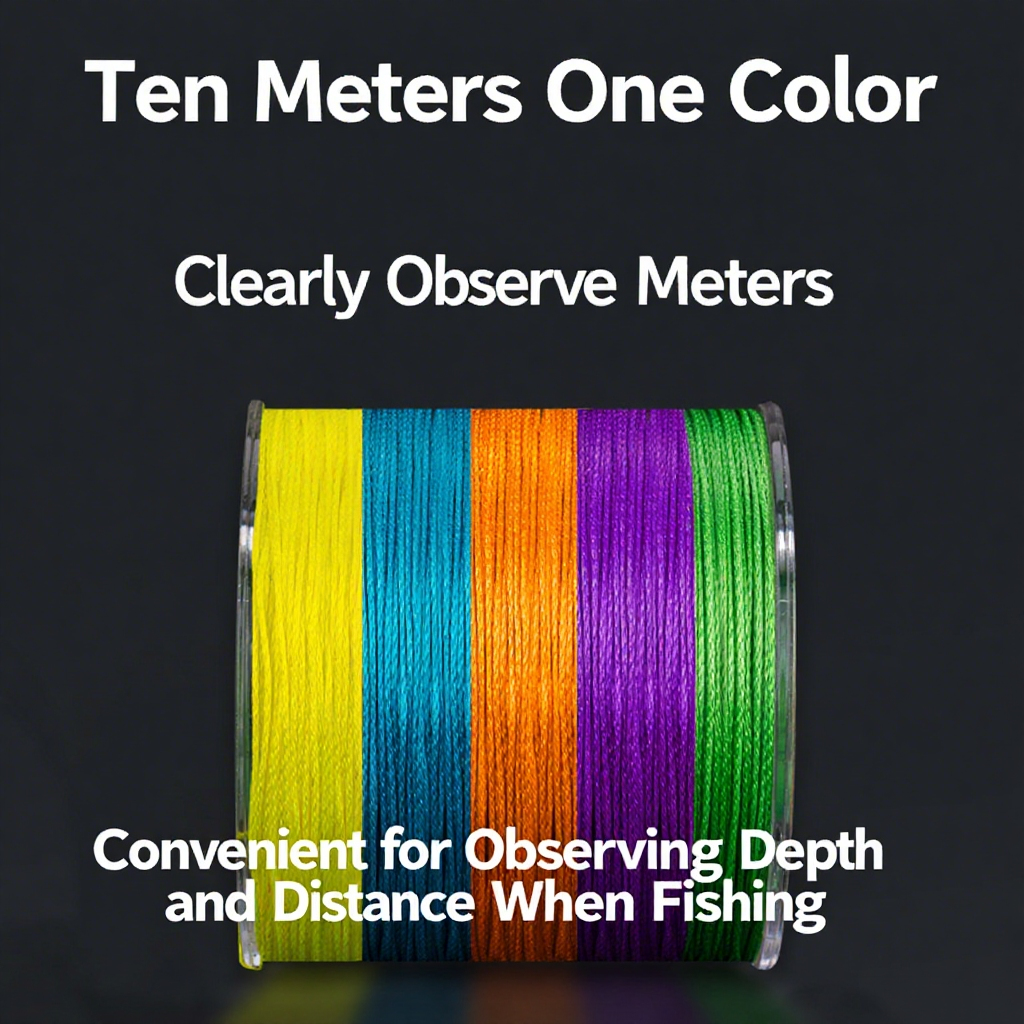
Color-metered every 10m or 25m if you like depth awareness while dropping
The "I want margin" pick: PE 0.8 – PE 1.0 (~0.13–0.17mm)
If you're fishing deeper channels and want to push 350–400m total (braid + backing), going finer lets you carry more without overfilling. The catch: thinner braid can bury (dig into itself) if a fish makes a violent, sudden run while the drag is locked and the top layer is undercut. On a narrow spool with proper arbor taper? Manageable. But you need to spool with care and not over-tension.
The "reef warrior" pick: PE 2.0 – PE 2.5 (~0.23–0.26mm)
If your world is chunky reef edges, amberjack corners, and you'd rather have abrasion bulk than max depth — step up. Just know you'll likely land closer to 240–270m on that 300m/0.27mm envelope. That's still plenty for most marks — but if your drift goes 120m deep and you're burning 80m of drop plus scope, you'll want to know that number cold before you leave the dock.
H2: The spool-filling method that saves you grief
Nothing kills a Line Management plan like a poorly spooled narrow jigging reel. Here's the bench routine that's kept my Gen 2 clean through multiple trips:
1. Arbor prep
Electrical tape strip across the arbor (lengthwise, not wrapped around) so the braid's first wrap can't slip. You want the line driving the spool, not skating on a polished metal tube.
2. Tension source
Wet towel over the donor spool, held with light hand-pressure or a cheap line-winder with drag. Too loose = future burial. Too tight = crushed diameter and false-full. You want it snug, not strangling.
3. The 1mm clearance rule
Fill to about 1mm below the spool lip — not flush, not shy. That tiny air gap is your insurance against the line creeping over the lip during a hard wind or a fish-run surge.
4. Mark your depths
A dab of bright nail polish or a 2mm section of contrasting whipping twine at ~100m and ~200m gives you a visible depth-reference without bulky tape tabs that catch on the frame's hollowed pockets.
H2: Leader logic — because braid alone doesn't catch fish
Your PE braid is a transmission cable. Your leader is the bait's handshake. For the Gen 2's drag class:
|
Condition |
Leader (Fluoro) |
Length |
Why |
|---|---|---|---|
|
Clean water / tuna / open column |
60–80 lb |
1.5–2.5 m |
Knot confidence, bite protection, shock absorption for that dual lever drag snap |
|
Reef / structure / amberjack |
80–100 lb |
2.0–3.0 m |
Abrasion margin where the fish tries to rub you on the bad side of the rock |
|
Clear spooky fish / high sun |
40–60 lb |
1.0–1.5 m |
Thinner profile, quieter entry, but you'd better not let him reach structure |
Knot between braid and fluoro? FG knot if you're confident and patient. Modified double uni or PR bobbin if the swell is bouncing you around and you need a knot you can tie without a microscope. Either way — seat it slowly, lubricate it, and pull-test it before that first drop. The ocean doesn't refund shame.
-
what does 300m / 0.27mm line capacity actually mean on a jigging reel
-
best PE braid diameter for narrow CNC jigging spool
-
why is my 0.27mm braid not fitting 300m
-
PE 1.5 vs PE 2.5 for slow pitch jigging depth
-
how much backing for Abyss Jigger Gen 2 300m braid
-
safe fill level narrow spool below lip mm clearance
-
4-strand vs 8-strand capacity difference on same labeled mm
These aren't forced in — they're the literal questions you ask yourself while untangling a bird's nest at 6:30am with coffee that's gone cold.
H2: Bottom line
That 300m / 0.27mm spec on your Goofish Abyss Jigger Gen 2 isn't a promise — it's a boundary. The right Braid Diameter choice, guided by real PE Line Rating logic and a 5-minute caliper check, turns that boundary into a weapon: more usable depth, better lay, cleaner retrieve, and one less thing to worry about when the rod loads and the water explodes.
Pick the line that fits the spool's truth, not the box's hope. Your drops will thank you.
-
CNC aluminum saltwater jigging reel (link to the hollowed-design / 680g engineering piece)
-
30kg max drag smoothness thrust bearing (link to the thrust-bearing article)
-
T-bar handle ergonomic grip vertical jigging (link to the handle article)
-
dual lever drag smooth control (link to the lever-drag deep-dive)
Want me to follow this with the natural companion page — "How to FG-Knot Slick 8-Strand Braid to Fluoro Without Wanting to Throw the Reel Overboard: A Step-by-Step Bench Guide" — with anchor-photo placement and schema FAQ for even more long-tail capture?






Leave a comment