

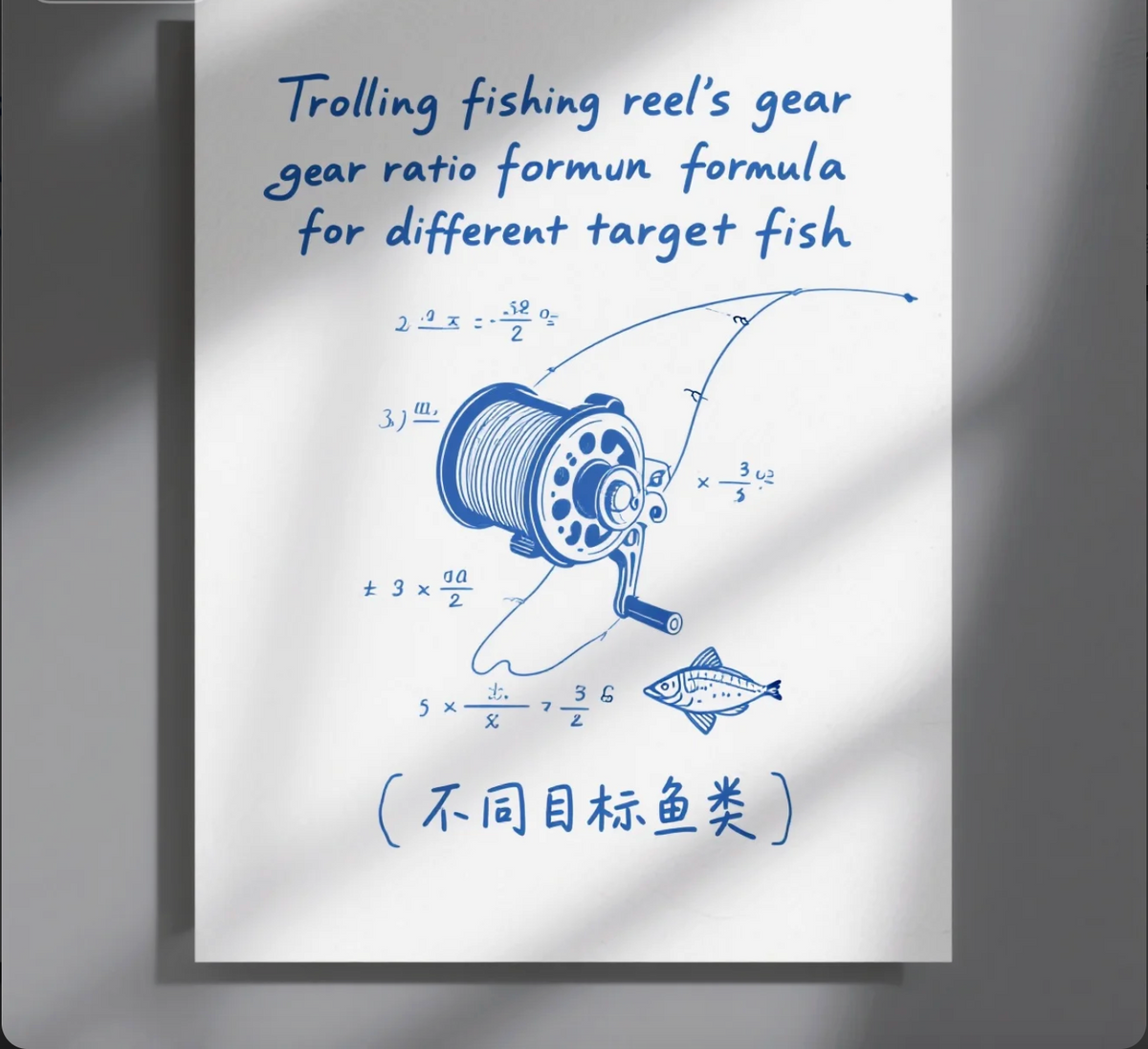
The Gear Ratio Decoder: Cracking the Code for Your Target Fish
The first time I truly understood gear ratio, I wasn’t reading a spec sheet—I was watching a $200 lure slowly disappear into the depths of Lake Michigan, attached to a screaming line. I was targeting suspended king salmon with a borrowed, high-speed reel. When the fish struck and ran, I cranked the handle furiously, but nothing happened. The spool wasn’t turning; the drag was screaming, but I couldn’t gain an inch of line. My buddy grabbed the rod, leaned into it with his body, and only then began the slow, grunting process of turning the handle. “This trolling fishing reel,” he panted, “is built for speed, not war.” The fish stripped 150 yards before we turned its head. We landed it, but my forearms were on fire. The reel had a blistering 6.4:1 gear ratio—perfect for burning buzzbaits for bass, but a torque-less torture device for deep, powerful salmon. That day, I learned gear ratio isn’t about “fast” or “slow.” It’s about applying the correct mechanical advantage to the fish in front of you. Let’s decode the formula, so you match the machine to the mission.
Beyond the Number: Gear Ratio is Physics, Not Hype
A gear ratio, like the 5.4:1 on a goofish brand trolling fishing reel, tells a simple story: for every single turn of the handle, the spool rotates 5.4 times. But this number unlocks two critical, opposing forces: Retrieve Speed and Cranking Power.
-
High Gear Ratio (e.g., 6.0:1 and above): The Sprinter. This is high speed, lower torque. Think of a racing bike on flat ground. One pedal stroke (handle turn) makes the wheel spin many times, covering great distance quickly. In fishing, this means you recover line fast. It’s ideal for quickly taking up slack, reacting to strikes, and casting a trolling reel and rapidly retrieving lures that need a fast, erratic action. The trade-off? It lacks low-end grunt. When you’re fighting a heavy fish or pulling a big diving plug, each handle turn requires more muscle.
-
Low Gear Ratio (e.g., 4.5:1 and below): The Weightlifter. This is high torque, lower speed. This is your mountain bike in its lowest gear. One pedal stroke moves the wheel slowly, but it can climb a near-vertical slope. In fishing, this gives you immense cranking power. You can winch a big fish from the depths or maintain tension against a heavy-planing diving board with less effort. The trade-off? You recover line more slowly.
The Universal Formula is this: Speed and Power exist in an inverse relationship. You cannot have the highest speed and the highest power in the same reel. Your target fish dictates which side of this equation you prioritize.
The Target Fish Decoder Matrix: From Tuna to Catfish
This is where we apply the formula. Let’s use the data from your image as our field guide.
The High-Ratio Hunters (6.0:1 and Above)
-
Target Fish: Wahoo, Tuna, Mahi-Mahi, Fast-Swimming Pelagics.
-
The Why: These are ocean sprinters. When they strike, the window to set the hook and regain control is seconds. A high-speed reel allows you to take up line blindingly fast after a strike, keeping constant pressure and preventing these acrobats from throwing the hook. It’s also perfect for “speed trolling” where the lure action is dependent on very fast boat speed.
-
The Setup: Pair a high-speed reel with a stiff, powerful trolling rod to handle the sudden, violent strikes. Use a high-strength braided line to minimize stretch and maximize the direct transfer of your retrieve speed.
The All-Purpose Athletes (4.8:1 to 5.4:1)
-
Target Fish: Salmon, Walleye, Striped Bass, most Inshore/Great Lakes species.
-
The Why: This is the sweet spot for versatility. You have enough speed to work a variety of lures and react to bites, but enough torque to fight a strong, dogged fish. My salmon disaster would have been averted with a reel in this range, like a standard 5.2:1. It provides the best balance for the unpredictable nature of multi-species trolling. This is likely the most common range you’ll find during a goofish trolling fishing gears sale.
-
The Setup: This ratio pairs with the vast majority of medium-heavy trolling combos. It’s the workhorse.
The Low-Ratio Powerhouses (4.5:1 and Below)
-
Target Fish: Catfish, Grouper, Lake Trout, Deep-Water Bottom Fish.
-
The Why: This is pure winching power. You’re not fishing for finesse; you’re fishing for upward force. These fish often require heavy weights to get to the bottom, and the fight is a straight vertical grind. A low gear ratio gives you the mechanical advantage to lift heavy weight and pull a powerful, head-shaking fish from structure. Every turn of the handle moves a lot of line with minimal effort, saving your arms on a long fight.
-
The Setup: This demands a reel with a massive, smooth drag and a rod with a parabolic bend to absorb shocks. It’s a specialized tool for a specific, powerful job.
The Lost Art: How to Cast a Trolling Reel
Your image wisely highlights casting a trolling reel. Many new anglers think trolling reels are “cast-free.” Not true. Knowing how to cast a trolling reel is essential for deploying lines away from the boat, setting a spread, or even for occasional casting and retrieving.
-
The Technique: It’s an overhead lob, not a bass-fishing whip. Disengage the spool (open bail or free-spool lever). Hold the line against the rod with your index finger. Using a smooth, pendulum-like motion from behind your shoulder to a 10 o’clock position, release your finger as the rod tip moves forward. Let the weight of your lure or planer do the work.
-
The Gear Ratio’s Role: A higher ratio helps you quickly retrieve any slack after the cast to get your lure to the working depth faster. A lower ratio gives you more control when slowly feeding line out to a precise distance.
Building Your System: The Ratio is the Heart
Choosing the right ratio is the first step in engineering a successful system. It influences everything downstream.
-
The Reel’s Partner: Your reel’s ratio must match your rod’s power. A high-speed reel on a soft, noodle rod is a mismatch—the rod can’t set the hook fast enough to utilize the reel’s quick pickup. A low-speed, high-torque reel needs a rod with serious backbone to apply that pressure.
-
Line Choice Matters: Low-stretch braid is the ideal partner for high-speed reels, as it transmits every inch of your rapid retrieve directly to the lure. For deep, powerful applications with low-ratio reels, the shock absorption of a heavy monofilament top shot can be beneficial.
-
The Lure’s Needs: A deep-diving crankbait that puts massive resistance on the rod is begging for a lower ratio. A surface bullet that needs to be “walked” quickly benefits from a higher ratio.
For the angler doing this research, the real searches are precise:
-
“best gear ratio for deep water lake trout trolling”
-
“high speed vs low speed trolling reel for walleye”
-
“how to choose reel gear ratio for salmon fishing”
-
“casting techniques for conventional trolling reels”
The Final Calculation: It’s About Strategy, Not Specs
My painful lesson on Lake Michigan wasn’t about a bad reel. It was about a misapplied tool. I was using a sprinter’s legs for a weightlifting competition.
Now, when I rig up, I think first about the fight. Am I preparing for a blistering, surface-level sprint? Or a deep, grunting battle of attrition? The number on the side of the reel—that gear ratio formula—gives me the answer before I make a single cast.
Don’t just buy a reel because it’s “fast” or “powerful.” Buy it because its internal gearing is engineered for the specific, beautiful struggle you’re seeking. Match the machine to the fish, and you’ll find that every turn of the handle feels not like work, but like a perfectly calculated step towards victory.
What’s in your arsenal? Do you have a high-speed fishing reel for one species and a low-speed grinder for another? What was the moment that made you appreciate the right gear ratio? Share your setup and stories in the comments below!







Leave a comment